Stalled at Design Development: Spotting a Project Before It Goes Dark
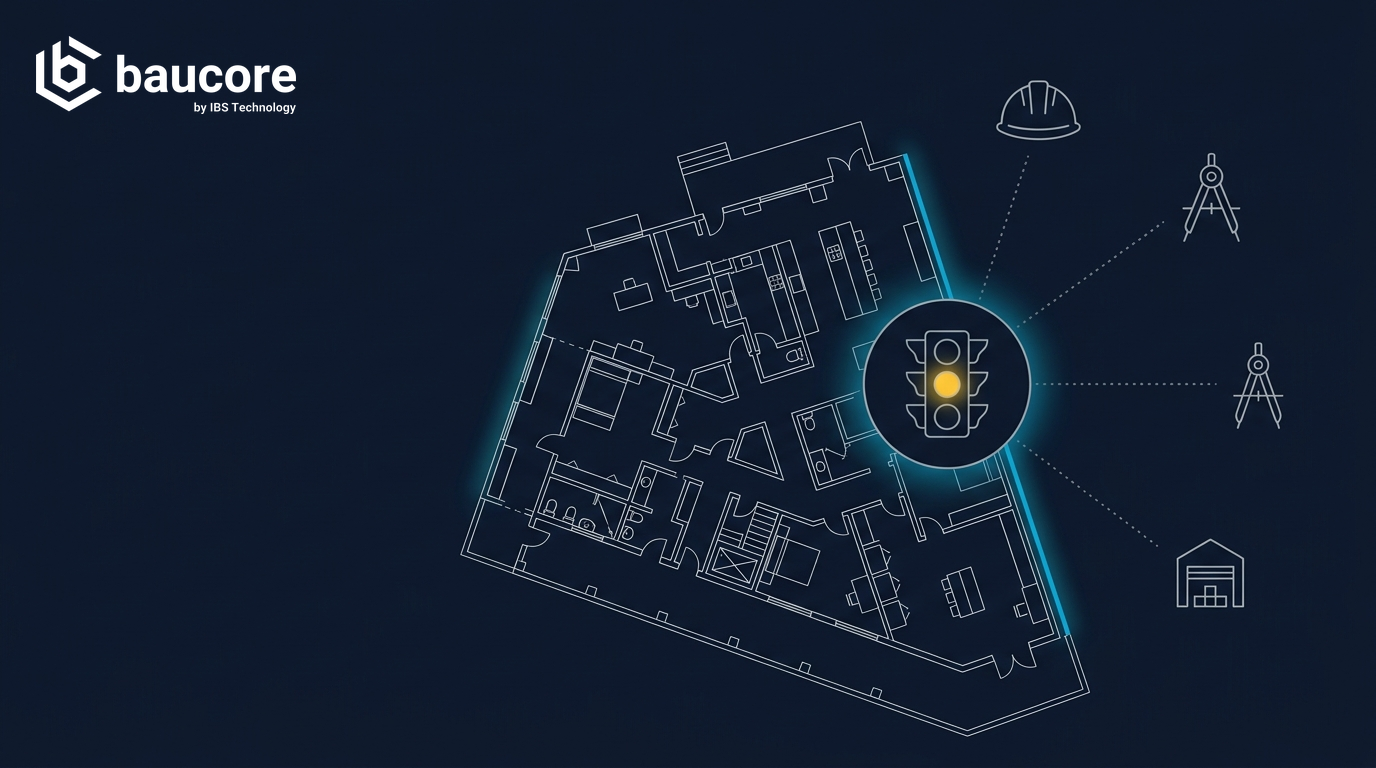
Every building product manufacturer has a version of this project in their pipeline: architect engaged, basis-of-design conversation started, sample requests fulfilled — and then nothing. No RFI, no follow-up call, no movement into permitting. The opportunity still sits in the CRM as "open," but it has effectively gone dark, and no one on the sales team can say exactly when that happened.
Design development is where this failure mode is most common, and most expensive. It's the longest and least structured phase of a construction project's lifecycle — long enough that a stall can hide for months before anyone notices, and early enough that losing the position here costs a manufacturer the spec before a single RFQ is ever issued.
Why Design Development Hides Stalled Projects
Standard CRM pipelines are built around deal stages that assume steady forward motion: Prospecting, Qualification, Proposal, Closed. Construction projects don't move that way. A project can sit in design development for six, nine, twelve months with genuine reasons — budget review, ownership change, permitting delays — that look identical, from the CRM's perspective, to a project the architect has quietly moved on from.
Without a project-specific signal for time-in-stage, both cases show up the same: an open opportunity with an old "last activity" date. Reps managing dozens of projects across multiple GCs, architects, and distributors don't have the bandwidth to manually re-check every stalled record for public news — permit filings, ownership changes, competitor sightings — that would tell them which is which.
Rule-Based Signals, Not a Black Box
Baucore's Project Health Signals apply a stoplight status — Green, Yellow, Red — to every active project, built on transparent, configurable rules rather than an opaque score. A project sitting past its normal time-in-stage, missing an expected milestone, or showing no recorded activity gets flagged Yellow or Red automatically, with the specific rule that triggered it always visible. A rep or sales manager can see exactly why a project is flagged — not just that it is.
Layered on top, Project Agent continuously scans public sources — permit databases, news feeds, company registries — for signals tied to each active project, and surfaces them the moment they appear: a permit filing that signals movement again, an ownership change that puts the spec at risk, a new stakeholder who's replaced the original point of contact. Combined with the stoplight status, this turns "the project's gone quiet" from a guess into a specific, actionable finding.
From Signal to Action
A flagged project is only useful if it leads somewhere. Recommended Next Actions takes the same underlying data — status, time-in-stage, missing milestones — and turns it into a concrete next step inside the workflow itself: follow up with the architect, confirm the current basis-of-design language, re-engage the distributor. The rep reviews and accepts the recommendation rather than hunting for what to do next across a dozen open records.
For a manufacturer selling into a market projected to need 499,000 new construction workers in 2026, up from 439,000 in 2025 [1], and with reps stretched across more territory than ever, this is capacity that doesn't require a single new hire. It's the difference between a design-development project quietly dying and a rep catching it in week three instead of month nine.
The Cost of Finding Out Too Late
By the time a stalled design-development project resurfaces — if it resurfaces at all — the basis-of-design conversation may already have moved to a competitor's product. Substitution risk is highest precisely in the gaps a standard CRM can't see: value engineering passes, architect staffing changes, distributor steering.
The stakes are higher in 2026 specifically because the margin for error has shrunk. Industry outlooks describe the current market as the slowest in years, with affordability pressure suppressing demand, buyers more cautious, and profit margins tighter across the board [2][3]. In a market like that, a lost spec isn't just a missed deal — it's margin a manufacturer can't easily recover elsewhere in the pipeline. Catching a stall early is often the only chance to intervene before the spec is lost, not after.
References
Want to see this in your own pipeline?
Talk to our team about how Baucore maps your projects, specifications, and participants inside Salesforce.