From Lead to Won Bid: Mapping the Project Lifecycle in Salesforce
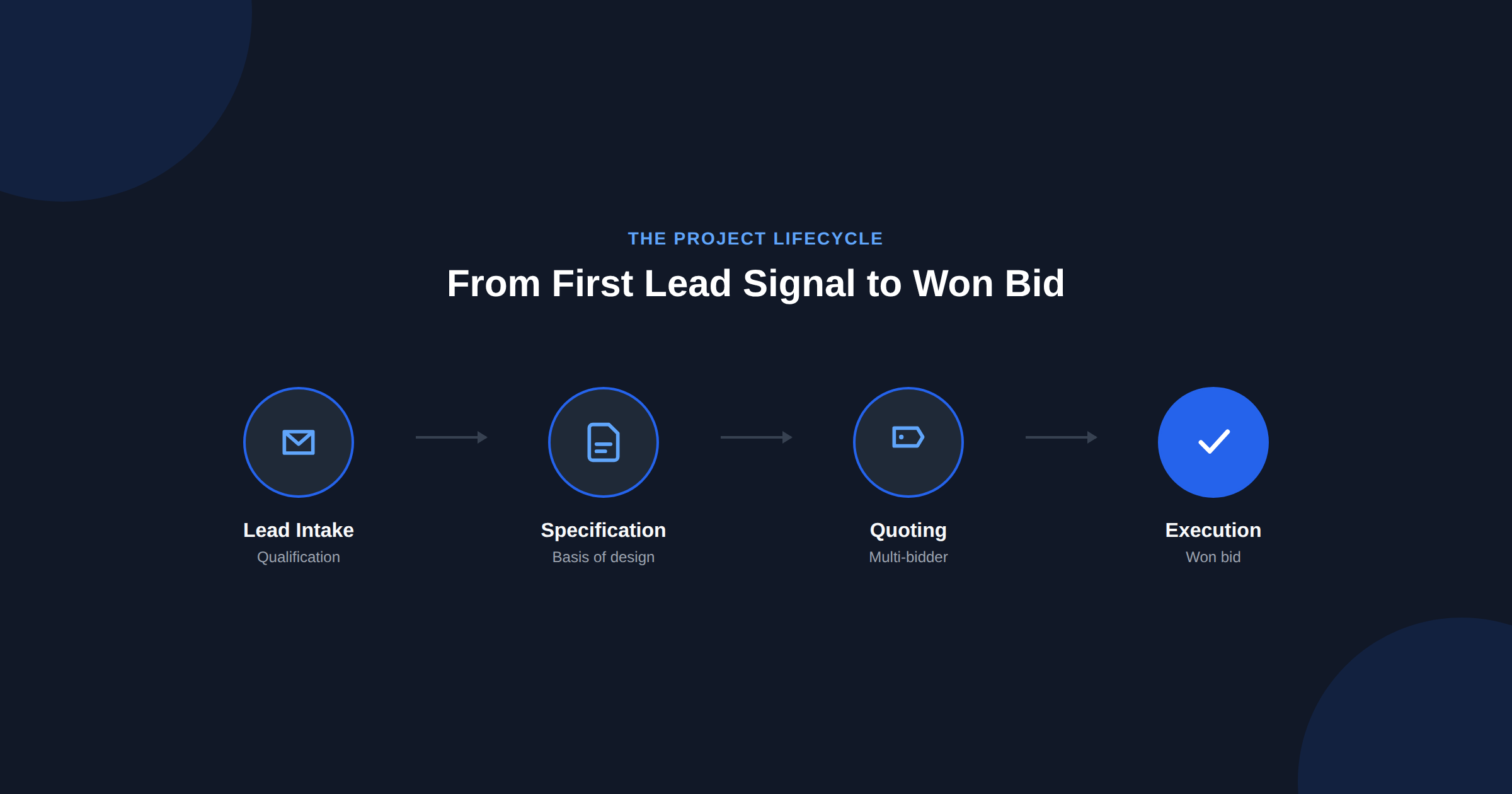
A standard Salesforce opportunity pipeline has stages like Prospecting, Qualification, Proposal, and Closed Won. That works fine for a sale with one buyer and one decision point. A building materials project has neither — it has a lifecycle with distinct phases, each with its own participants, and its own way of ending badly if nobody's watching.
The four phases that actually matter
1. Lead intake and qualification. Projects surface from external data providers, ibau/BarbourABI-style feeds, referrals, or inbound inquiries — often before there's a defined scope or budget. The job here isn't closing anything; it's deduplicating against projects you may already be tracking and deciding whether it's worth a rep's time.
2. Specification and development. This is where basis-of-design decisions get made, long before a bid is requested. (We cover this phase in detail in our piece on specification tracking.)
3. Quoting and execution. Once an RFQ arrives, the clock compresses fast — multiple bidders, multiple distributors, tight turnaround windows. This is where a rep needs instant visibility into whether the project is specified in your favor, and who else is quoting.
4. Project execution support. Winning the bid isn't the finish line. Order fulfillment, delivery scheduling, and on-site issues all still route back through the same project record — and still shape whether that customer specifies you again next time.
Why forcing this into a generic pipeline fails
If all four phases live inside one opportunity object, you lose the ability to see where a project actually is. A project stuck in specification for eight months looks identical, in a standard pipeline, to one that's three days from a bid deadline. Reps end up relying on memory and spreadsheets to track what stage of the project — not the opportunity — they're actually in.
Mapping it correctly
The fix isn't more custom fields on Opportunity. It's giving the project itself a lifecycle independent of any single deal: one project record that persists from first lead signal through post-award execution, with opportunities, quotes, and participants all hanging off it rather than the reverse. That's the only structure that lets a sales leader ask "which projects are stuck, and where" and get a real answer.
Want to see this in your own pipeline?
Talk to our team about how Baucore maps your projects, specifications, and participants inside Salesforce.